

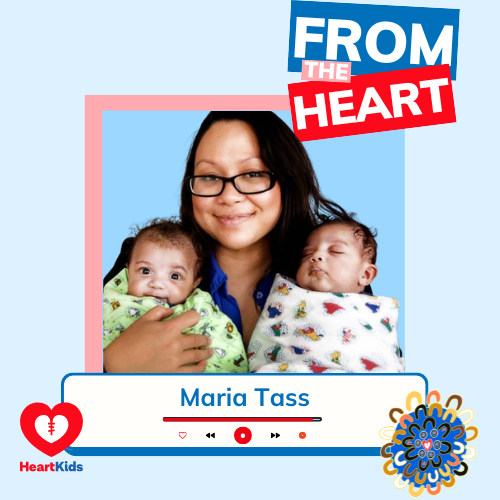
In this episode of From The Heart, Angela Webb, our Aboriginal and Torres Strait Islander Community Engagement Manager, speaks with Maria Tass and her twin sons, Benson and Albert, from Mackay, Queensland. Born with congenital heart conditions in 2015 and later diagnosed with rheumatic heart disease, the boys went through multiple surgeries and were among the first patients at Queensland Children’s Hospital.
Transcript:
Angela Webb: Welcome to From the Heart, HeartKids Podcast, where we share real stories from people living with childhood-onset heart disease. My name is Angela Webb. I’m a proud Gumbaynggirr woman from the mid north coast of New South Wales and the Aboriginal and Torres Strait Islander Community Engagement Manager at HeartKids.
I’d like to begin by acknowledging the traditional owners, custodians of the lands, seas, and communities across Australia, and pay my respects to elders past and present.
Today I am speaking with Maria Tass and her twin sons, Benson and Albert from Mackay in Queensland. Benson and Albert were both born with congenital heart conditions in 2015 and later diagnosed with rheumatic heart disease. They were also among the first children to have open heart surgery when Queensland Children’s Hospital opened.
Maria and the boys are here to share their journey, the role of culture and community in their lives, and their ideas for using storytelling and creativity to raise awareness and inspire others.
Maria: I think that’s probably the hardest thing about being diagnosed with a disease that you don’t know about, is that, you know, you want all that information and once you get to know people and find those links, it becomes a lot easier.
Angela: So, welcome guys. Where are you joining us today? Tell us a little bit about where you’re from.
Benson/Albert: I’m from Mackay, the Yuwi Nation. Yuwi Nation, Mackay.
Angela: And can you tell us a bit, about your Torres Strait Islander heritage and what it means to you?
Maria: So your Torres Strait is who? Nanny?
Benson/Albert: Nan. Nan and South Sea Island from Pop.
Maria: So Torres Strait is our nanny’s, our nanny’s side, and she’s a Williams. And our Poppy’s side is Tass, Pilatari. Yeah. In their language.
Angela: Oh, beautiful. Beautiful country. Have you ever had the opportunity to get back up in the Torres Strait?
Maria/Benson/Albert: No, not yet. Never been.
Angela: Not yet. Oh gosh. It’d be so beautiful. Oh, thank you. Um.
Maria: They did men’s group on the weekend.
Angela: Oh!
Maria: Men’s business. Sorry. Men’s business. Okay. Men’s business. Yeah, they’re going through all that.
Maria: Junior Rangers. That’s what it is.
Angela: Oh, ranger program.
Maria: Yes, the Ranger program. And they’ve just started it. So they went up on a bit of a like, you know, out on the reef learning about animals, and they went on a walk and went to a cave. They’ve seen a whale, I can’t believe it. Two whales come straight to their boat. Like reachable, yeah.
Angela: Oh wow. Gosh, boys, when you come over to Western Australia, you’ll have to go diving with the whale sharks. I did a swim with whale sharks. You know those big spotty looking things. Yes. They’re amazing. Very beautiful. Yes. They, what?
Maria: Do they bite?
Angela: No, no, no. They’re real docile. They’re beautiful. They just skim along the water and then you watch them dive right down, and then they go outta sight, but they’re like big as a bus.
Maria: That’s cool. That’d be so cool. Yeah.
Angela: So, yeah, tell us a little bit about your journey, their heart journey and what, what it’s, what it means to you so far, and what’s been happening?
Maria: So I was, I had the 20 week scan here in Mackay. And they found out that Albert, Twin A, had a heart defect, so they sent us to Townsville, which then they found out that both babies had defects. So then we became too high risk for Townville, so they sent us to Brisbane. So I think in the end, I think it was about 28 weeks when I found out about both of them.
We had to, we had a day trip to Brisbane. They pretty much said, go home, say goodbyes, and then come, come. So I think I went there in October and then we didn’t leave there again until March or May. One of the two. So we were there for that time.
We had our first Christmas at hospital, we had our second Christmas in hospital as well. Yeah, we did, we had two Christmases in hospital.
Angela: Oh my gosh.
Maria: So Benson had surgery first. He had a stent put in by open heart surgery and that was at two weeks. And then he then had a bowel perforation and he had to have that fixed up as well. It was full on. It was very touch and go for Benny for a long time. So that was scary. And then Albert had surgery, at about one month. So he was the first cardiac patient at Lady Cilento at the time, and he had stent surgery at three weeks, but they had to abortt that surgery because it didn’t work. It failed. And then in that time, he had a stroke and he was booked in to have open heart the next morning, but they had to wait until he becomes stable. Then he just kept getting sick. And so then he ended up having surgery a week later. They ended up just pulling the pin and just saying, yep, no, he has to have open heart, and he had it then.
Angela: Yeah.
Maria: So Benson’s got a Fallot with a VSD repair and Albert’s got pulmonary artresia with a VSD repair.
Angela: Oh my gosh. Just to have, you know, just one child go through that. But you had two all at the same time, and geez, what a journey. How did you feel at the support that you were provided at the Queensland Children’s Hospital? How was that?
Maria: Uh, yeah. Yeah. HeartKids were amazing. There was lots of, well back then before COVID, there was lots of, um, volunteers that could, sit with the boys. At one stage there I was by myself, so my partner Farron had gone back to work. My mum had gone home, so it was just me. There was lots of times where I had to spend half the day on the ward with Albert and then go down to NICU and spend the rest of the day with Benson. And then when Albert was well enough, I could take him off the ward and they could be together.
So I don’t think they were together or touched each other for, hmm, it would would’ve been close to a month. Before they got to be really with each other. Benson did have some time out of hospital, so he was in special care and then he come out for a couple of days and then he then got admitted. So I think it was like, yeah, seven days that he come out.
Benson/Albert: For a week got to come out.
Maria: And not even
Angela: Hmm. Yeah. Gosh. So, and then later on, both boys were diagnosed with rheumatic heart disease. How did you learn about that and what was the moment for you when you found out?
Maria: So they both got really sick. Benson got really sick first. He was like febrile. He was very, very sick. He was really sick for about a day or two and Albert was at his Nan and Pop’s and then he come home and he was really unwell as well.
So I took them both to hospital, I think this was maybe like day three or four maybe, I took them in and we got discharged three times before they admitted us. They didn’t end up testing Benson because he was starting to get better with medication, whereas they tested Albert. Because the third time when we come back, Albert’s knee had flared up. It flared up and he was screaming in the shower, “Mum, mum, it hurts.”
So then, yeah, I took them both back in because Benson was still fevery. But they only tested Albert for rheumatic, which sort of annoyed me a little bit because I was like, well, shouldn’t you test both of them? Because they’re both unwell. The only thing that’s different is that Benson doesn’t have a flare up.
And um, yeah, they ended up testing Albert, he got diagnosed in April 2022 and Benson then got diagnosed in August. But I think they both had it the same time.
Angela: Yeah, that’s just, yeah. And just not to pick that up straight away, you know?
Maria: Yeah, it’s just very submissive too, which made me quite angry, like quite upset because they were just like, well, you know, kids can, one of the nurses that I remember specifically said to me, oh, kids can have fevers up to 9, 12 days. And I was like, well, these are two heart kids for starters. You know, they shouldn’t be having that sort of infection. Like, you know, something obviously is going on in their bodies for that long. And just really like submissive. Like I, I normally don’t go to hospital unless we absolutely have to. And they just, yeah, were very … it was, it was very sad.
Those fevers weren’t even being touched by the Panadol that I was giving. They weren’t going away. They were both so lethargic, like they weren’t moving. And that’s, that’s not them. They can’t sit still these kids even when they’re unwell. But this, they we’re not moving, so.
Angela: And so now, they’re on their regular bicillin treatments?
Maria: Yes.
Angela: And how do you feel, boys, about the getting the needle? What’s, what’s your take on that?
Benson/Albert: It doesn’t matter when you get used to it. Yeah. Well, the first time wasn’t as great. It hurts. But as I got used to it, it’s like just a little pinch. Yeah. Going in.
Angela: You are so strong, so, so strong. And it’s just so lovely that you can share your story for other Aboriginal and Torres Strait and all the kids out there, you know, just amazing. So thank you. So tell me a bit about, the biggest challenges during their treatment.
Maria: For their first lot of surgeries, I think the challenging thing was having two and being on two different wards. That to me was the hardest.
The separation and not being able to, and I guess that’s where HeartKids came in really well. They would sit and have cuddles with the baby up on the ward while I could be down in with NICU. And that was great. When the boys became a little bit better and a bit more mobile, they actually got our pram that we had here at home sent to us, all free of charge, which was really great.
Because, you know, being away for over six months, renting at the time, you know, me not working. Obviously Farron had to go back so that we could, because he originally had a month off, and that was great. But yeah, not, not having family close by was really hard. I did have a couple of friends come and stay.
One of my friends, she stayed with me for a week, which was so great, and we took turns going back and forth to the hotel, so that I could have a sleep and she would stay with the kids. That was when they were both on the ward. So that was great. And then, my sister also came and my niece, which was really nice, and my mum and my brother, they had all turns.
So the first month that I went down, so in October, my mum come with me for the month, and she spent that time with me. And then my brother came for the birth while, and Farron was also there. That was great.
Angela: Oh, you’re lucky to have such a big, supportive family. You know, it is hard with that financial and emotional wellbeing that you need, you know? The financial impacts and the, yeah, to be able to have your family wrap around you and support you like that. Just would’ve been amazing for you to have that.
So tell me, so life today. So tell me how, Benson and Albert are doing now, like in school and their like sporting, you know, I know they’re pretty sporty, so –
Maria: Yeah, definitely. So the boys have played with the North Devils in Mackay here for six years.
Benson/Albert: No, five.
Maria: For five years. Because they had last year off, about six years. So pretty much from yeah, juniors right through at the moment and this year as well, mid senior. And then they also play touch and any, interschool, anything.
So soccer, cricket, what was the other one? Footy they had played as well interschool sports, which is good. Great. Yeah, it’s just all of the sports really cricket, all of it, so that was good. They’re very sporty. They haven’t been on any medications this whole time, which is great. They’ve lived a pretty normal life.
The only way that you would know that they had a heart condition is when they take their shirts off, really.
They’re pretty blessed that way, after everything that’s happened, you know, from the bowel, perforated bowel to the stroke in his brain. Like it’s just, yeah, we’re pretty blessed.
I’ve noticed as a mum. And the first aid officer, the last few games for Albert, I’ve noticed that he was sort of, you know, asking to come off a bit more or be a little bit more puffed.
But to be honest, they’d play 10 games and still get up and wanna play. Like you can’t tell them, just sit down, just rest for a minute. You know? Like, calm down. You can come off. Like, it’s okay. They’re like, no, they need me. I’m good.
Angela: Like, you can tell that with them, they look so hypo. But they’re little boys too. So they’re at school. They’ve got great supports around them. So how do you manage the ongoing RHD treatment alongside? Other, you know, the other issues you just said that they’re, they’re fine, they’re not on a lot of medication or anything like that, but, um, you have a good relationship with the local AMS – is that where they go to get their –
Maria: Yeah, the hospital, yeah. So we go hospital, yeah. So they just go to the children’s clinic outpatients there and everyone knows them or has heard of them.The nurses there are really lovely that look after them, so we’re really lucky to have them.
Angela: Yeah. Oh, good. So tell us a little bit about you. You touched on it earlier, but they’re Torres Strait Islander identity, and that’s your husband’s Torres Strait. Yes, that’s right. And um, and do you find, that with Mackay Hospital where you go, they’ve got good supports for Aboriginal and Torres Strait Islander families?
Maria: Yeah, definitely. If we ever get admitted, we get a social worker come through. They normally introduce themselves to us and offer any needs or any helps if we need it. But generally it’s pretty good, so.
Angela: Oh, that’s good. Yeah. And I know you’re a big advocate of HeartKids. You’re always out there doing things and yeah, always behind all our campaigns, it’s been amazing having you on board. So thank you so much for all that. I wanna touch on, you’ve spoken about maybe doing a book about your journey.
Maria: Yeah, definitely. With the boys and their journey, we just want to do a book on all the things that they’ve got and possibly add some links in there and the HeartKids and everything like that so that they can hand out books to other mums that have information in it that they can grab and read that in that time.
Someone once told me when we were in hospital that it feels like every day is a year in hospital. Like, and days and weeks become months, and it just feels like such a long journey, but it’s the journey at the time and the outcome outweighs it. Like it’s only such a small, like at that time I felt like it felt like forever and nothing was ending.
It was just like constant problem after problem. And just giving other parents that have the unknown hope that, you know, there’s two kids here that have both got heart conditions and they, they both made it through and it’s not all doom and gloom. And, and yeah, just to put that in a little, in a little book and, you know, give some support and put the hotlines and the links in there and stuff for parents to look and see the pages and, and, you know, the HeartKid community, I guess is a really good one. It’s, it’s the support in the HeartKid community is actually amazing.
Angela: Yeah, I think you know, that strength that you could bring and the resilience, showing the resilience of the boys and just how that will help others, you know, other family members and that they’re not alone. There is a light at the end of the tunnel.
Maria: A hundred percent yes.
Angela: And you also mentioned working with an indigenous artist. What would that collaboration mean to you?
Maria: Oh, it would just be amazing because the boys love their culture. They love their culture, dancing, they love all of that sort of thing.
To work with an artist and have their artwork in behind a photo or their little story or their little spiel or something like that would just be, it would just be so grateful and an honor, and it would just be amazing.
Angela: I’m sure Benson and Albert would love being in a little storybook and showcasing them and their journey and just to teach kids, all about that and heart health, it’d be just amazing.
Angela: Yeah, so just, I suppose just reflecting on what you’ve talked about and what the boys have said, what advice would you give to other parents who’ve just found out about their child has a heart condition or RHD?
Maria: Our advice would be that they’re not alone. Um, there is lots of support. You just have to have those right connections to know where they are.
I think that’s probably the hardest thing about being diagnosed with a disease that you don’t know about is that, you know, you need, you want all that information. And once you get to know people and find those links that it’s, you know, it becomes a lot easier. And that it is a brief moment and, you know, it could be a lot worse, but they have a preventative to help make it better rather than, you know, worse.
Angela: No, that’s beautiful. Yep. And Benson and Albert, what would you like to say to other kids that are going through the same thing you just went through?
Benson/Albert: Be strong and just try your best to not get as sick as you can. So like, just don’t, yeah. Don’t get any other disease that you aren’t born with and stuff. Eat healthy. Eat healthy. Yeah. Eat healthy. Yeah, eat healthy, keep fit. Keep fit.
Angela: Yeah. Yep, for sure. Good messages.
Benson/Albert: Friends and family for support. Yeah.
Angela: Wow. Yes. So important, isn’t it?
Benson/Albert: Yeah.
Maria: And definitely I think to talk about it too, because I think that if it’s you know, a hidden thing, then I think then you feel a bit shadowed and, and you feel like you can’t talk about it. But I think that if the more you talk about it and the more support you get, I think the easier it is.
Angela: Yeah, and I really love that, you know, be strong, look after yourself, great messages, eat healthy, keep fit, and that friends and family, you know, wrap them around you and make, help them and help you, help you grow strong.
You are just such strong boys. Healthy, uh, inside, you know, you’ve got a lot of strength and resilience, so, yeah. That’s great. And what, you’ve got two other children, Maria.
Maria: Yeah.
Angela: And how have they felt through this whole journey?
Maria: So Farron has an older boy, his name’s Eli. He was only five, four – I think he was four at the time when they were born and he was turning five. So I guess learning that he had little brothers and he couldn’t see them, probably would’ve been hard. But then our brother, Farron’s sisters brought him down to Brisbane, and he got to meet them and it was such a special moment.
It was actually really beautiful, which was nice. And we got to see the boys. That was great. I have a little daughter as well who’s, um, only four. Um, so she hasn’t experienced any of that real medical side of things. She has seen the boys get needles before and it’s very sweet. She’s so supportive.
She’s like, do you want me to hold your hand? And hey, she’s super, like, I’ll give you a hug. And she’s really, she’s really, she’s quite supportive. So, um, I think that would be the hardest to leave them you know, in that time when the surgery, the next lot of surgery comes up, but the Ronald McDonald House now that they have now is a bit more family … I can fit more people in, so I think it’ll be a little bit better having, being able to bring the kids with us if they want to, sort of thing, you know, and they can do their schooling down there and whatnot, which would be really great.
Angela: Oh, that would be awesome. Yeah, for sure. Together.
Maria: Yeah. If we have to be away for a long period of time.
Angela: Oh, well, is there anything else you’d like to share with our listeners today?
Benson/Albert: Be strong. You know that you’re not alone. Lots of family and friends for support.
Angela: Oh, that’s beautiful.
Maria: And definitely talk about it. Talk about how you’re feeling. Let your friends know so that if things are not feeling great they’re aware and can alert an adult. We’re very open. We talk about it with all our friends and family.
Angela: And yeah, just to have, as I said before, you’ve got so much support and love around you and yeah. You, you know, you can see that in the boys and they’re just very strong and resilient. They’re just such amazing role models, I think for others. It’s beautiful to see.
Maria: I can’t actually wait for the kids to be old enough to maybe go to a HeartKids camp. Maybe the teenage ones, because I think meeting other children that are like them would be just a good eye-opener.
And to know that, you know, they know that they’re not alone,
Angela: Those teen camps are just amazing for that peer support and then sharing your stories and doing such, you know, all that fun stuff together and building that little community of heart kids.
Maria: I can’t wait. It’ll be good.
Angela: Yeah. And fingers crossed we get some funding so we can keep doing those teen camps.
Maria: A hundred percent.
Angela: Bringing everyone together. Well, thank you so much. I just, I really, you know, I, I’ve been wanting to speak to you and the boys for a while now, and, yeah, just sharing your story and what you’ve gone through, With all the operations and now RHD on top of that and, you know, you both work and you’re still managing our home and the health side of things. So yeah, my hat off to you and the family.
And I’m just so pleased that HeartKids is, you know, we’re with you and we walked beside you, and, we’re here for whatever you need.
Maria: Yeah, well, I think not last year, the year before maybe the HeartKids gave the boys the opportunity to play on Suncorp, so that was pretty amazing.
Angela: Oh, wow.
Maria: Pretty, a big highlight for the boys. They got to play with some other HeartKids kids on the Suncorp, which is Benson’s team Broncos.
Angela: Before the Broncos game? Oh, that would’ve been awesome. Yeah. How did you feel?
Maria: It was so good.
Angela: How did you feel about that?
Maria: Nervous. He was nervous, fun.
Angela: A lot of people watching you,
Maria: Very lucky. They’ve experienced a lot of things, which is really lovely. So yeah, living their best life.
Angela: I can see that. Oh my gosh. Well thank you so much. Thank you. And we’ll be in touch. We’ll keep in touch and I want to know more about this book and how we can support and yeah, definitely be a part of that and help you. Wherever we can.
Maria: Definitely. That’ll be amazing. Thank you. Thank you for having us.
Angela: Thank you. Thank you. It’s been great.
Outro by Sami: Sometimes this podcast talks about some heavy things. If this brings up anything for you or someone you love, it is important to reach out for support the HeartKids Helpline provides support and guidance for anyone impacted by CoHD. You can call the helpline on 1800 432 785. To access more information about CHD as well as support from HeartKids, visit the website at heartkids.org au.
The information on this podcast is not a substitute for medical advice from your doctor or healthcare team. Always talk to your doctor about matters that affect you or your family’s health.