
Aortic Valve Disease (AVD)
What is Aortic Valve Disease?
Aortic valve disease (AVD) is a condition in which the valve between the main pumping chamber of your heart (left ventricle) and the main artery to your body (aorta) doesn’t work properly.
AVD can be a congenital heart defect, but can also be acquired later in life due to other health conditions
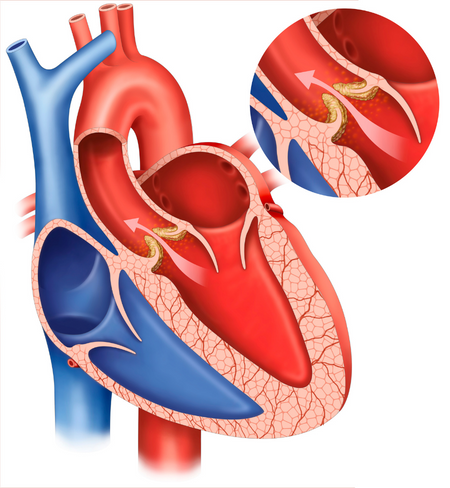
Types of AVD:
There are two commonly known types of AVD:
Aortic valve stenosis:
The aortic valve is the last one that blood flows through before going to your body. The aortic valve has three flaps (or leaflets) that open to let blood pass through, then seal shut to keep blood from flowing backward into the heart chamber.
When someone has aortic valve stenosis, these flaps may be stiff, or fused together (this is known as a ‘bicuspid valve’). This causes narrowing of the aortic valve opening. As the narrowed valve cannot open fully, it can block blood flow from the heart into the body and the rest of the body.
With aortic valve stenosis, the pressure in the left ventricle is much higher than normal, and the heart will need to work harder to pump blood out to the body. Over time, this can cause thickening (known as hypertrophy) and damage to the overworked heart muscle.
Aortic valve regurgitation:
While aortic valve stenosis occurs when the aortic valve cannot open fully, aortic valve regurgitation occurs when the aortic valve is unable to close properly.
This causes blood to flow backward from the aorta and into the left ventricle of the heart.
To compensate for that blood leaking back into the left ventricle, the heart will have to work harder, which can cause the walls of the ventricle to thicken, making the heart muscle less effective at pumping.
What are the symptoms of aortic valve disease?
If the instance of aortic valve disease is mild, the heart won’t be overworked, and symptoms won’t occur. In the case of moderate or severe aortic valve disease, symptoms may include:
- Chest pain
- Fatigue
- Shortness of breath
- Dizziness
- Fainting
Will my child need treatment?
What kind of treatment options are there?
The valve can be treated to improve obstruction or leaking, but cannot be made to be normal.
If the pressure in the left ventricle is too high, the obstruction may be relieved during cardiac catheterization by balloon valvotomy. In this procedure, a special tool – a catheter containing a balloon – is placed across the aortic valve. The balloon is inflated for a short time to stretch open the valve. This is called a valvotomy.
If the aortic valve no longer responds to valvotomy or has become severely leaky, it may need to be surgically replaced. There are three methods for replacing the aortic valve:
- The Ross procedure, a surgery in which the abnormal aortic valve is removed and replaced by the child’s own pulmonary valve. Then the pulmonary valve is replaced with a preserved donor pulmonary valve.
- Aortic valve replacement with a preserved donor valve.
- Aortic valve replacement with a mechanical valve.